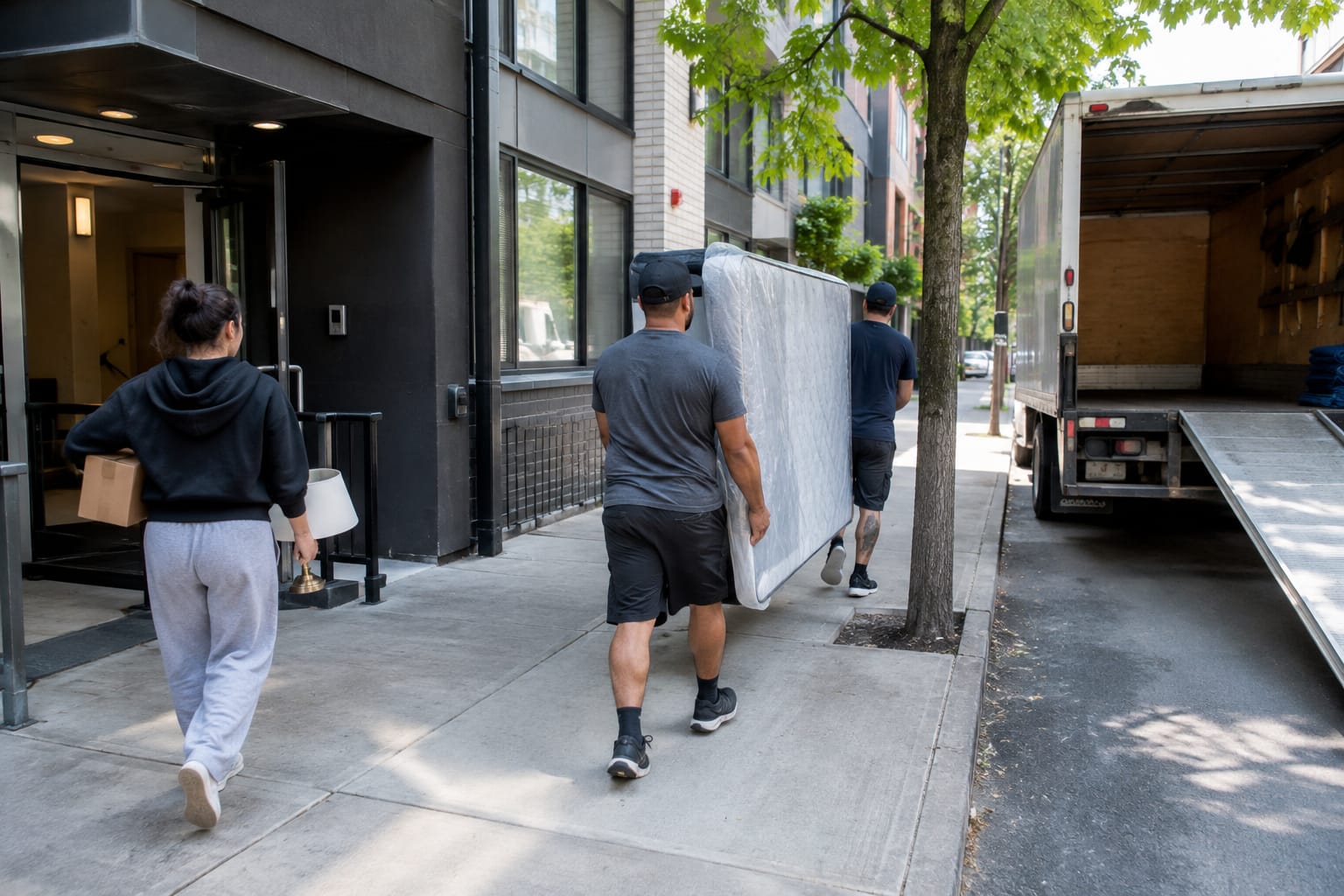
A small move is a relocation that fills only part of a truck, such as a studio, a dorm room, or a handful of large items, but is still too heavy or awkward to handle alone. Hiring help for small moves works differently than hiring for a full house. Minimum charges, weight minimums, and shared-truck schedules shape your price and timeline more than the size of your load does. This guide matches each type of small load to the right kind of help, explains how pricing works, and shows how to vet a mover before you book.
Key Takeaways: Match Your Load to the Right Help
Start with the load, not the company. This table pairs common small loads with the type of help that usually fits, how that help is typically priced, and the one question worth asking before you book.
| Your load | Best-fit option | Usual pricing basis | Ask before booking |
|---|---|---|---|
| Dorm room or a few boxes, local | Labor-only movers plus a rental van, or a small local mover | Hourly, with a minimum number of hours | Does the minimum include travel time? |
| Studio apartment, local | Local full-service mover | Hourly rate per crew, with a minimum | How many movers and what truck size do you plan to send? |
| One heavy or bulky item | Mover with the right equipment, or a single-item service | Flat fee or hourly minimum, sometimes with item surcharges | Have you moved this exact type of item before? |
| Studio or partial load, interstate | Licensed interstate household goods carrier, or a moving container | Weight or space used, often with a weight minimum | What is the minimum weight, and what is the delivery window? |
| You pack and drive, but need muscle | Labor-only movers loading your truck or container | Hourly, with a minimum | Who covers damage that happens during loading? |
What Counts as a Small Move
There is no official definition. Movers use the term for loads that take up only part of a truck and a few hours of labor. Common examples include a studio or small one-bedroom, a dorm room, a storage unit clear-out, or moving one piece of furniture across town.
The label matters because most pricing is built for bigger jobs. Minimum charges and weight minimums kick in no matter how little you own. A small load can cost more per item than a large one.

Before you contact anyone, write a complete inventory. Include the mini-fridge, the bike, the TV stand, and the boxes under the bed. Small moves tend to grow once everything is out of the closet, and an incomplete list is the most common cause of a surprise bill.
Your Options: Full-Service Movers, Labor-Only Help, Containers, and Shared Loads
Four types of help cover nearly every small move. Each one trades cost against convenience and control in a different way.
- Full-service local movers. A crew arrives with a truck, loads, drives, and unloads. This suits studio apartment movers jobs where you want it done in one session.
- Labor-only movers. A crew loads or unloads, but you supply the vehicle. They do not transport your goods, so you own the driving and the risk on the road.
- Moving containers. A company drops a portable container at your door, you or hired help load it, and the company transports it. This works well for a small long-distance move with flexible dates.
- Shared loads, also called consolidated shipments. Your items ride on a truck with other customers' goods. It usually costs less than a dedicated truck, but the delivery window is wider.
If you are torn between doing it yourself and hiring a crew, compare the real trade-offs in our guide to DIY vs. full-service moving.
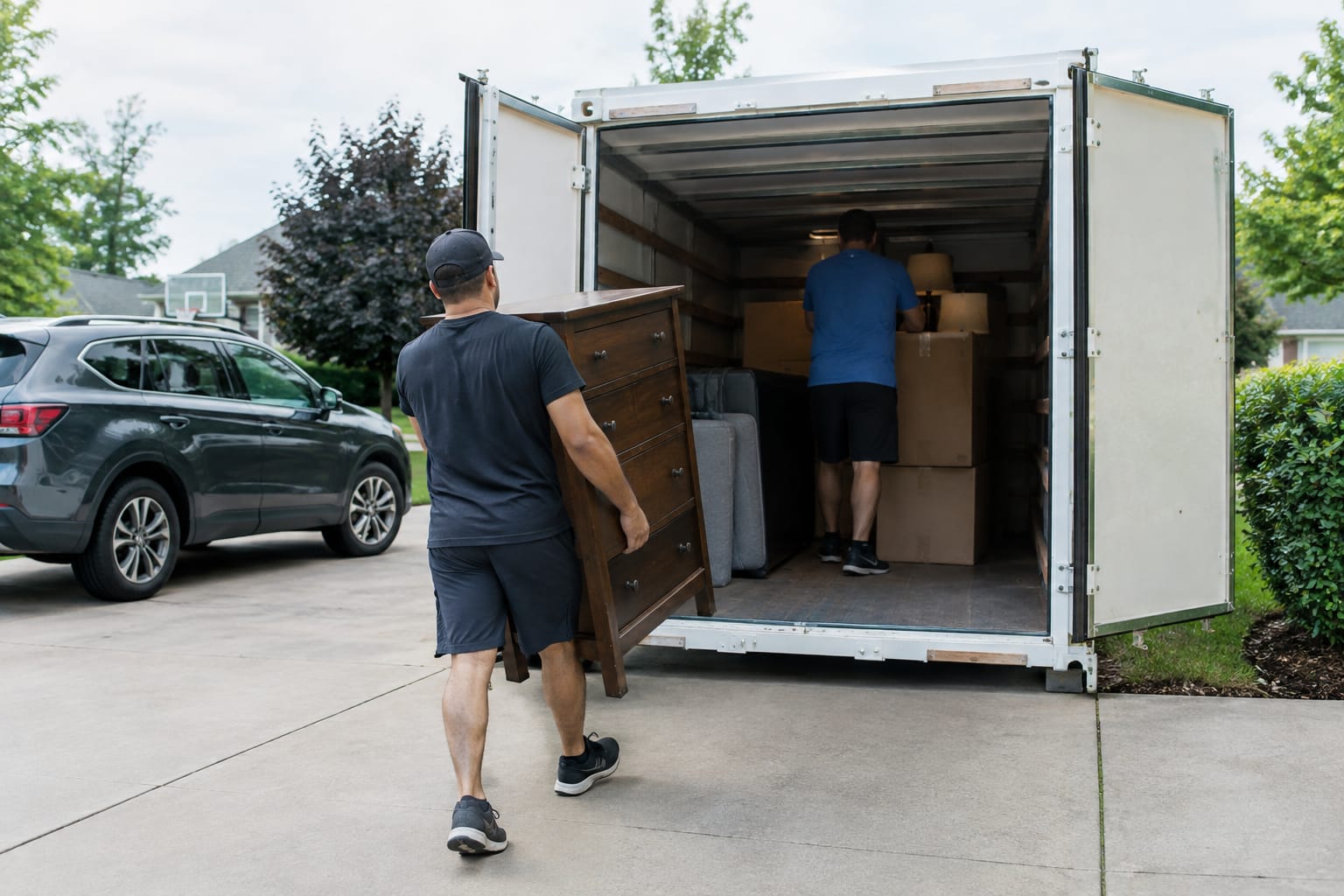
Q: What is the cheapest way to move a few items?
A: For a local move, renting a van or truck yourself and paying labor-only movers by the hour for loading and unloading is usually the lowest-cost option. For interstate moves, a moving container or a shared load typically costs less than reserving a dedicated truck.
The cheapest option is not always the best value. If you would need to take a day off work, rent a truck, and buy insurance on it, a local full-service minimum can end up close in price.
How Small Moves Are Priced: Minimums, Hourly Rates, and Weight
Small moves feel expensive because of floors, not because of your stuff. Every pricing model has a minimum that applies even when your load is light.
Local moves are typically billed by the hour for a crew and truck. Most companies set a minimum hours charge, and many add travel time or a flat truck fee. A job that takes 90 minutes may still be billed at the full minimum. For a detailed breakdown, see how hourly pricing works on local moves.
Interstate moves are usually priced by weight and distance. Carriers commonly apply a weight minimum, so a light shipment gets billed as if it weighed the minimum amount. Ask for the minimum in writing before comparing quotes.
The type of estimate also matters. A binding estimate locks the price for the services listed. With a non-binding estimate, federal rules require the mover to release your goods on payment of no more than 110% of the non-binding estimate at delivery, with any balance billed later.
Q: Why does a small move cost almost as much as a bigger one?
A: Minimum charges, such as hourly minimums on local jobs and weight minimums on interstate shipments, set a price floor regardless of load size. Truck fees and travel time add fixed costs on top.
For current price ranges by move type, our breakdown of what a move costs covers the main variables. Your own small move cost comes down to written quotes for your specific inventory.
Local Small Moves vs. Small Long-Distance Moves
Crossing a state line changes the rules. Interstate household goods carriers fall under federal regulation by the Federal Motor Carrier Safety Administration (FMCSA), while local and intrastate moves follow state rules that vary widely.
| Factor | Local or intrastate | Interstate |
|---|---|---|
| Who regulates | Your state, which varies | FMCSA under federal rules |
| Typical pricing | Hourly with a minimum | Weight and distance, often with a weight minimum |
| Estimate | Rules vary by state | Written estimate required |
| Timing | Usually same-day delivery | Delivery window, often wider for small shipments |
For interstate moves, federal rules require the mover to provide a written estimate before the move. The same rule requires a physical survey of your goods when they are within 50 miles of the mover's location, unless you waive it in writing. Movers must also give you the federal consumer booklet on your rights and responsibilities before you sign an agreement.
The biggest practical difference is time. Small interstate shipments often travel on shared trucks, so the carrier fills the truck before heading out. Expect a delivery window of several days rather than a fixed date, and get the agreed window written into your order for service.
More about the service: DEMOULAS SUPERMARKETS INC
Moving a Few Large Items: Furniture, Appliances, and Specialty Pieces
One heavy item is still a real moving job. A sofa, a dresser, a washer, or a gun safe needs the right crew size, equipment, and a clear path out of the building.
Measure the item and every doorway, hallway, and stairwell it must pass through. Note tight turns, elevator dimensions, and whether the item must be disassembled. Movers price single-item jobs on these details, not on the item alone.
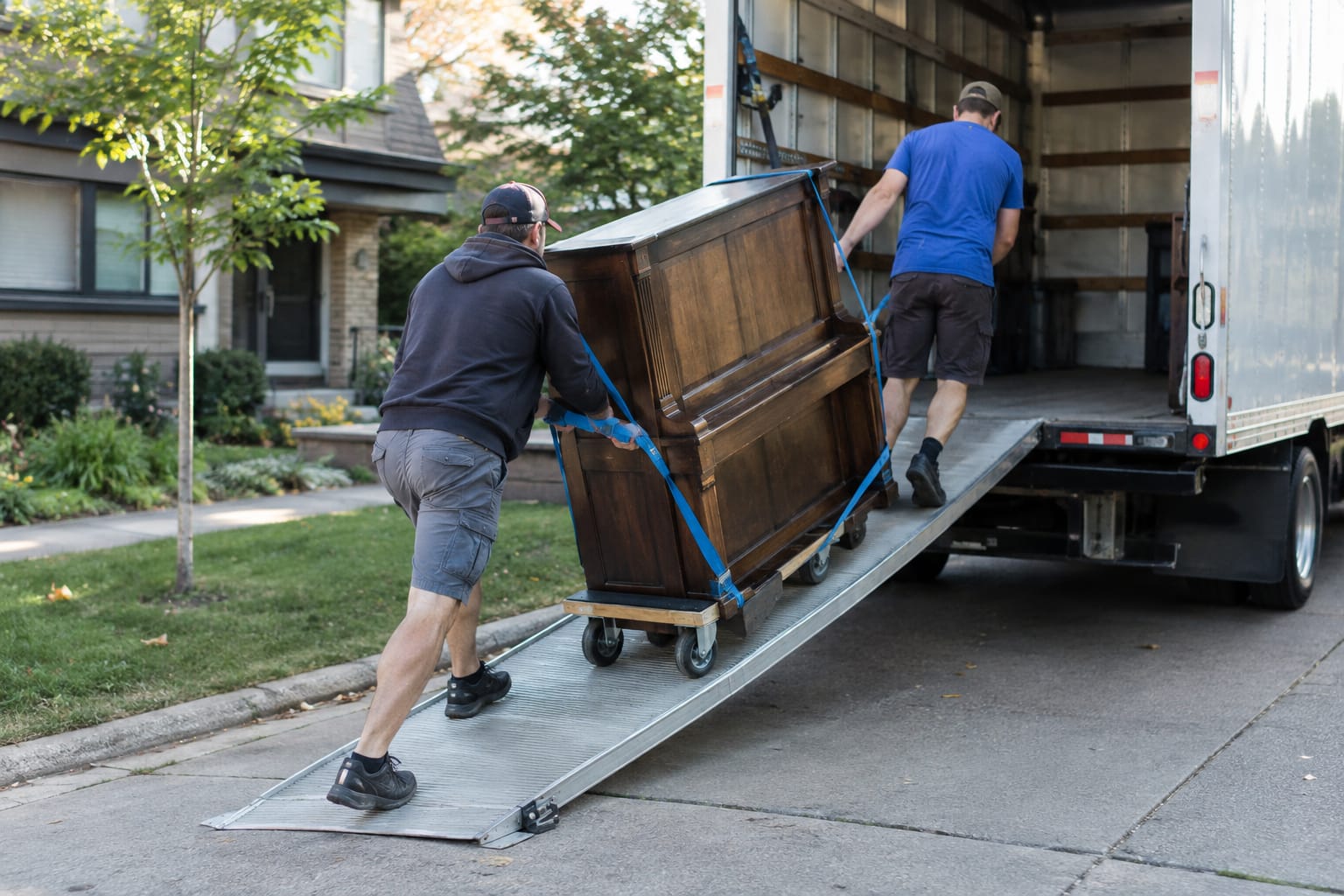
Appliances add a separate question. Many movers will not disconnect or reconnect gas or water lines, so confirm who handles that before moving day. Pianos, artwork, and antiques often need specialty handling, which is covered in our guide to moving pianos, art, and other specialty items.
Check coverage for high-value pieces. Default coverage on interstate moves, called released value, pays based on weight rather than what the item is worth. A light but expensive piece can be badly underinsured unless you choose a higher valuation option.
How to Get Accurate Quotes for a Small Load
Accurate quotes come from complete information. Vague requests lead to low phone estimates that grow on moving day.
Use this quote-request checklist with every mover you contact:
- Full inventory. Every item, including boxes by approximate count and size.
- Dimensions and weight of anything large or heavy, from the label or manufacturer specs.
- Photos of each large item and of tight access points.
- Access details at both ends: floor number, stairs, elevator, and how far the truck can park from the door.
- Disassembly needs, such as bed frames, desks, or table legs.
- Exact addresses or ZIP codes for pickup and delivery.
- Dates and flexibility. State whether you can accept a delivery window.
- Services wanted, such as packing, materials, or loading only.

Send the same checklist to several companies so the quotes are directly comparable. Ask each one to state the minimum charge, the estimate type, and every fee in writing.
Vetting a Mover That Takes Small Jobs
Small jobs deserve the same scrutiny as large ones. Small interstate shipments carry extra risk because they are often handed between brokers and carriers and travel on shared trucks.
Q: Do movers take small jobs?
A: Yes. Many local movers, labor-only crews, container companies, and FMCSA-registered interstate carriers accept small loads, though they apply minimum charges that set a price floor.
For any interstate move, look up the company's USDOT number in the FMCSA SAFER Company Snapshot. Confirm it holds active authority and whether it is a carrier that moves your goods or a broker that arranges the move with someone else. Search for complaints in the FMCSA National Consumer Complaint Database.
The USA Moving Advisor directory tracks license status, complaint history, and safety data, and lets you find licensed movers and filter by specialty, location, authority type, or score. Use it to build a shortlist, then request written quotes from each company on it. If you already use a USA Moving Advisor account, sign in before comparing small-move carriers.
Watch for these red flags:
- A firm price over the phone without seeing your inventory or photos.
- A large deposit demanded before the move.
- Blank or incomplete paperwork you are asked to sign.
- No USDOT number on an interstate quote.
- Pressure to commit the same day.
Labor-only crews do not transport goods, so they will not show up as household goods carriers. Check their reviews, ask for proof of insurance, and confirm any state or local licensing that applies.
Frequently Asked Questions
What's the cheapest day to hire movers?
Midweek and mid-month dates outside the summer peak tend to be the least expensive, because demand is lower. Weekends, month-end dates, and early summer are typically the busiest periods for movers.
Is it worth hiring movers for a studio apartment?
Often, yes. A studio usually fits within a local mover's minimum charge, so you pay for a few hours and avoid renting a truck, recruiting friends, and taking on liability for damage.
Can I hire movers just to load a truck or container?
Yes. Labor-only movers load or unload a rental truck or portable container that you arrange. Confirm in writing who is responsible for damage during loading, since the crew is not transporting your goods.
Written by USA Moving Advisor Team
Useful Links
- Local Moves: How Hourly Pricing Really Works
- DIY vs Full-Service Moving: Which Saves You More?
- How Much Does a Move Cost? A 2026 Breakdown
- Moving Pianos, Art, and Other Specialty Items
- Browse Verified Moving Companies
Need help with this? DEMOULAS SUPERMARKETS INC · Contact us