
A moving company safety rating is the Federal Motor Carrier Safety Administration's (FMCSA) official judgment on whether a carrier's safety management meets the federal standard. FMCSA assigns it only after an on-site review. There are four possible results: Satisfactory, Conditional, Unsatisfactory, and Unrated.
Most people first see the rating on a mover's SAFER Company Snapshot and don't know how much weight to give it. This guide turns each rating into a decision: hire, ask questions first, or walk away. It also shows exactly where to find the rating and which public records to check next.
Key Takeaways
- Satisfactory means FMCSA reviewed the mover and found adequate safety controls. It is a good sign, not a guarantee of good service.
- Conditional means a review found gaps that could lead to violations or crashes. The mover can still operate, so ask what was cited and what has been fixed.
- Unsatisfactory is the walk-away rating. Once it becomes final, the carrier is barred from operating commercial trucks in interstate commerce.
- Unrated means FMCSA has never completed a rating review. It is common, and it is not a red flag by itself.
- A rating covers safety, not pricing, estimates, or damage claims. Pair it with inspection history, licensing, insurance, and complaint records.
What a Federal Safety Rating Is and Who Assigns It
FMCSA assigns safety ratings to motor carriers after a compliance review. That is an on-site examination of the company's records. The rules sit in 49 CFR Part 385, the federal Safety Fitness Procedures.
Under that regulation, investigators look at drivers' hours of service, vehicle maintenance and inspection, driver qualification, commercial driver's licenses, insurance, crash records, and other safety files. A compliance review can be triggered by a carrier's request to change its rating, by suspected violations, or by complaints. The scoring method is laid out in Appendix B to Part 385. It groups findings into six factors: general, driver, operational, vehicle, hazardous materials, and accident.
One practical point: brokers do not receive safety ratings. A broker arranges your move but doesn't run trucks. If a broker books your job, the rating that matters belongs to the carrier that actually loads your belongings. Get that carrier's name and USDOT number in writing.
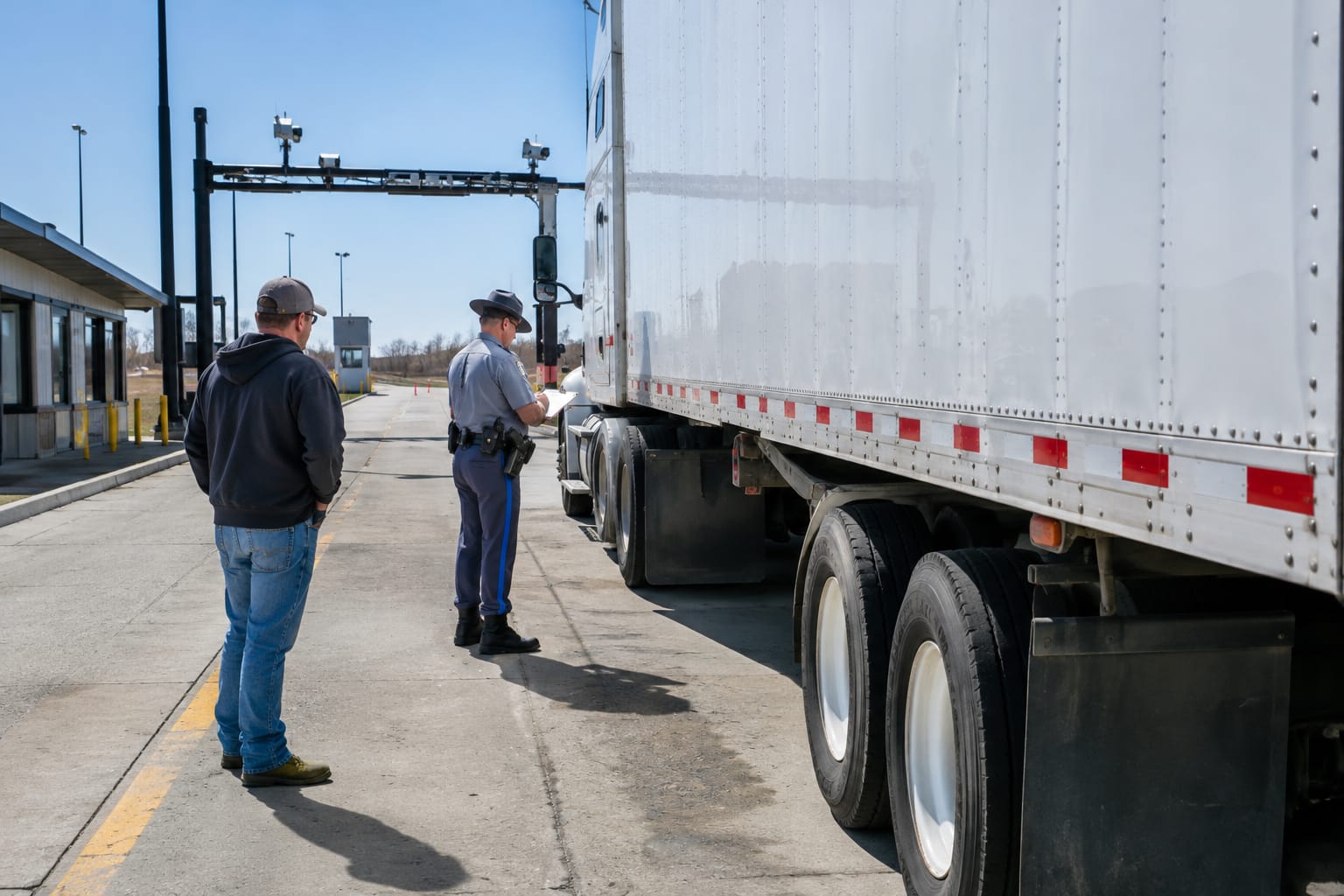
The Four Ratings: Satisfactory, Conditional, Unsatisfactory, and Unrated
FMCSA defines each rating in 49 CFR 385.3. Here is what each one means in plain English, and what to do about it.
| Rating | Official meaning (per 49 CFR 385.3) | Plain English | What to do |
|---|---|---|---|
| Satisfactory | Adequate safety management controls are in place and functioning | FMCSA checked and the safety systems passed | Hire, after checking service records too |
| Conditional | Controls are inadequate, which could result in violations or incidents | A review found real gaps that haven't yet caused serious harm | Ask questions before signing |
| Unsatisfactory | Controls are inadequate, which has resulted in violations or incidents | Gaps found, and they already led to problems | Walk away |
| Unrated | No safety rating has been assigned | FMCSA hasn't done a rating review | Neutral; check other records |
The difference between Conditional and Unsatisfactory is a single word in the regulation: "could" versus "has." That word decides whether a mover keeps operating.
Q: Can a mover with an unsatisfactory safety rating still operate?
A: No, once the rating is final. Under 49 CFR 385.13, a household goods carrier may not operate commercial vehicles in interstate commerce beginning the 61st day after FMCSA notifies it of a proposed Unsatisfactory rating.
The carrier can appeal or request an upgrade by proving it fixed the problems. For you, that 60-day window is the risk. A mover can still be booking jobs while the clock runs. Any Unsatisfactory rating on the snapshot is reason enough to move on.
Why Most Movers Are Unrated — and What That Does and Doesn't Mean
Unrated is the status you will see most often. The reason is structural, not a sign of misconduct.
Ratings come only from on-site compliance reviews, and FMCSA can't review every carrier. Reviews tend to go to companies flagged by crash data, inspection results, or complaints. New carriers go through a safety audit instead. Part 385 states plainly that a safety audit does not result in a safety rating. A newer mover that passed its audit will still show as Unrated.
Q: Is an unrated moving company safe to hire?
A: An Unrated mover can be safe to hire, but the label proves nothing either way. Per 49 CFR 385.3, Unrated simply means FMCSA has not assigned a rating, so judge the mover on its inspection history, authority, insurance, and complaints instead.
What Unrated does mean: there's no official verdict, so you need other evidence. What it doesn't mean: that the mover failed anything or is hiding something. A long-established Unrated mover with clean roadside inspections can be a stronger choice than a Satisfactory carrier whose rating is a decade old.
Should You Hire a Mover With a Conditional Rating?
Sometimes, but not without answers. A Conditional rating means investigators found gaps in areas like driver qualification files, hours-of-service records, or vehicle maintenance. The carrier stays fully authorized to operate.
Before you sign, ask the mover directly:
- When was the rating issued? The rating date appears on the SAFER snapshot. A Conditional rating from many years ago with clean inspections since tells a different story than one from last spring.
- What was cited? A paperwork lapse is less worrying than findings tied to maintenance or unqualified drivers.
- What changed? Ask for specifics: new maintenance schedules, hires, or software.
- Have you requested an upgrade? Under 49 CFR 385.17, a carrier can ask FMCSA to upgrade its rating by documenting corrective action.
Walk away if the answers are vague, the rating is recent, and the snapshot shows an out-of-service rate above the national average printed beside it. One weak signal is a question. Several pointing the same way is your answer.
How to Look Up a Mover's Safety Rating Step by Step
The rating is free to check and takes a few minutes. FMCSA's SAFER Company Snapshot is the official source.
- Get the USDOT number. Legitimate interstate movers show it on their website, trucks, and paperwork. If a company won't give it to you, stop there.
- Search SAFER by USDOT number. Name searches return look-alikes. The number is unique to one company.
- Check the top of the snapshot. Confirm the legal name and DBA match the company you're talking to. Then confirm the Operating Status reads authorized for property, not "Not Authorized" or out of service. Look for "Household Goods" under Cargo Carried.
- Scroll to the Carrier Safety Rating section at the bottom. It lists the Rating Date, Review Date, Rating, and review Type. If the Rating field reads "None," the carrier is Unrated.
- Read the inspection table above it. It shows roadside inspections and out-of-service counts for vehicles and drivers over the past 24 months, next to a national average.
- Confirm authority and insurance. FMCSA's Licensing & Insurance system shows whether the household goods authority is active and insurance is on file.
Pro Tip: Compare the Rating Date to the inspection window. A Satisfactory rating from years ago describes a company that may have changed owners, drivers, and trucks since. The last 24 months of inspections are the more current signal.
USA Moving Advisor syncs its directory regularly from FMCSA's SAFER and Licensing & Insurance systems. You can search FMCSA-licensed movers and filter by authority type or score, or start with a state such as California movers or Florida movers. Here is an example of a mover's license and FMCSA profile to see how the fields look in one place.
The authority-type filter matters. A USDOT number alone doesn't make a company a household mover. FMCSA registers private fleets too, which is why a supermarket chain's FMCSA license and safety record sits in the same federal data as moving companies. Always confirm household goods authority before trusting any rating.

More about the service: UNITED CENTRAL INDUSTRIAL SUPPLY COMPANY LLC
What a Safety Rating Doesn't Tell You About Customer Service
A safety rating measures whether a carrier runs safe trucks with qualified drivers. It says nothing about how the company treats customers.
A Satisfactory mover can still give a lowball estimate, inflate the bill on delivery day, or drag its feet on a damage claim. Those issues fall under a different rule set, 49 CFR Part 375. It covers estimates, the bill of lading, and how movers must handle claims. Know your rights when you move, including your BOL, inventory, and valuation options before you sign anything.
Many moving scams involve companies with valid registrations. Watch for the common moving scam red flags: large cash deposits, estimates given over the phone without an inventory, and a name that doesn't match the USDOT record.
Other Public Records to Check Alongside the Rating
The rating is one data point. These records fill in the rest of the picture:
| Record | Where to find it | What it tells you |
|---|---|---|
| Inspection and out-of-service history | SAFER Company Snapshot | How often trucks and drivers fail roadside checks |
| Crash history | SAFER Company Snapshot | Reportable crashes over the past 24 months |
| CSA / SMS data | FMCSA Safety Measurement System | Violation detail by category, such as unsafe driving and vehicle maintenance |
| Authority and insurance | FMCSA Licensing & Insurance | Whether household goods authority is active and coverage is on file |
| Consumer complaints | FMCSA National Consumer Complaint Database | Filed complaints about estimates, delivery, and damage |
Out-of-service means an inspector found a violation serious enough to pull the truck or driver off the road until it's fixed. A rate well above the national average on the snapshot deserves the same scrutiny as a Conditional rating.
CSA (Compliance, Safety, Accountability) is FMCSA's broader enforcement program, and SMS is the tool that scores violation data. Some SMS scores for property carriers are hidden from public view, so treat the public SMS page as a supplement, not a verdict.

FMCSA's Protect Your Move resources explain consumer rights and how to file a complaint. For the complete checklist, follow the full seven-step mover vetting process.
The Bottom Line
Read the rating as a filter, not a final answer. Satisfactory earns a closer look. Conditional earns hard questions. Unsatisfactory ends the conversation. Unrated sends you to inspection, authority, insurance, and complaint records.
Whichever rating you find, verify it against the USDOT number on your contract. The USA Moving Advisor directory lists only FMCSA-licensed movers and lets you filter by authority type, location, specialty, or score.
Frequently Asked Questions
How often are moving company safety ratings updated?
Not on a set schedule. A rating changes only when FMCSA completes a new compliance review or approves a carrier's upgrade request under 49 CFR 385.17. That's why some movers carry ratings that are many years old. Inspection and crash data on the snapshot reflect a rolling 24-month window, so they are the fresher indicator.
Does a safety rating include customer complaints?
Not directly. The rating scores safety management, not service quality. Complaints can still matter: Part 385 lists complaints among the triggers for a compliance review. Check the FMCSA National Consumer Complaint Database separately, and look for patterns rather than single incidents.
Written by USA Moving Advisor Team
Useful Links
- Browse Verified Moving Companies
- How to Vet a Moving Company in 7 Steps
- 10 Moving Scam Red Flags (and How to Respond)
- Your Rights When You Move: BOL, Inventory, and Valuation
- Moving FAQ — Costs, Rights, Scams & More
Need help with this? UNITED CENTRAL INDUSTRIAL SUPPLY COMPANY LLC · Contact us