
Moving pods cost depends on five things: how far the container travels, how big it is, when you move, how long you keep it, and the fees added on top of the base rate. There is no single national price. A local move with one month of rental is priced very differently from a cross-country move with three months of warehouse storage.
That is why two quotes for the same move can look far apart. Each company bundles and labels its charges differently. This guide breaks down how portable moving container cost is structured and which fees to expect. It also includes a checklist for comparing quotes line by line and shows when a container beats a rental truck or a full-service crew.
Key Takeaways
- Quotes are bundles. A container quote combines delivery, transport, monthly rental, storage, redelivery, and add-ons. Compare each line, not the total.
- Distance and storage time dominate. Line-haul charges drive long-distance pricing, and every extra month of rental or storage adds to the bill.
- Hidden fees are common. Redelivery, failed delivery attempts, fuel surcharges, schedule changes, and damage protection often sit outside the base quote.
- Containers sit in the middle. They usually cost more than a rental truck and less than full-service movers, and they win when you need storage or flexible loading time.
- Verify before booking. For interstate moves, check the company's USDOT number in the FMCSA search and get claims terms in writing.
How Portable Moving Container Pricing Is Structured
A moving container quote is a bundle of separate charges, even when it shows a single total. Once you can name each piece, you can compare quotes fairly and spot what is missing.
Most quotes are built from these components:
- Initial delivery: the company drops an empty container at your current home.
- Pickup and transport: the container is collected and moved to your new home or to a storage facility. For long-distance moves, this line-haul charge (the cost of hauling the container between cities) is usually the largest part of the bill.
- Final delivery: the container is dropped at your new address. If it went to storage first, this is a separate redelivery trip.
- Monthly rental: a recurring fee for each container, charged whether it sits in your driveway or in a facility.
- Storage: some companies fold storage into the monthly rental. Others charge a separate facility rate.
- Add-ons: damage protection, locks, packing supplies, and optional loading help.
Here's the thing: a low headline price often reflects a short rental period or a missing trip. The only fair comparison is the full trip sequence from first delivery to final pickup of the empty container.
The Biggest Cost Drivers: Distance, Container Size, Timing, and Storage Duration
Four variables account for most of the difference between one container quote and another. Distance and storage duration usually matter most for long-distance moves. Size and timing matter most for local ones.
Distance. Local moves are typically priced around delivery trips and rental time. Interstate moves add a line-haul charge that rises with mileage and with how busy the route is. Before requesting quotes, review popular moving routes and their distances so you know roughly where your move falls.
Container size and count. Providers usually offer a few sizes, from compact units suited to a studio to larger units that hold a few rooms of furniture. Larger homes often need two or more containers. Each extra container brings its own delivery, transport, and monthly charges.
Timing. Demand peaks from late spring through summer and around the end of each month, when leases turn over. Booking a mid-month, off-season date generally gives you more availability and better pricing.
Storage duration. Every month the container stays out adds rental or storage charges. If closing dates slip or your new home is not ready, storage time can quietly become a major line item.
Q: What does a container storage monthly fee cover?
A: It covers keeping the container on your property or in the provider's facility for each billing period. Climate control, facility access, and damage protection are often priced separately, so confirm each one in writing.
Container storage is a rental arrangement, not the same as storage booked through a full-service mover. If you are weighing both options, compare them against the storage-in-transit rules and costs that apply when a licensed mover holds your goods mid-move.

Fees That Often Appear Beyond the Base Quote
The base quote rarely captures every charge. These fees show up most often on final invoices. Ask about each one before you sign.
- Redelivery fees: charged when a container goes to storage and comes back out. This is a separate trip from the original delivery.
- Extra or failed delivery attempts: if the driver cannot place the container because of blocked access, a low tree branch, or a missing permit, you may pay for the wasted trip.
- Fuel or transportation surcharges: some companies add these to long-distance moves on top of the line-haul rate.
- Damage protection: coverage for your belongings inside the container is usually an optional add-on, and limits vary widely.
- Schedule change and cancellation fees: moving a delivery date close to the move can trigger a charge.
- Late return or overtime rental: keeping the container past the agreed period adds rental time, sometimes at a higher rate.
- Remote or hard-to-reach locations: addresses outside a provider's standard service area can carry extra delivery charges.
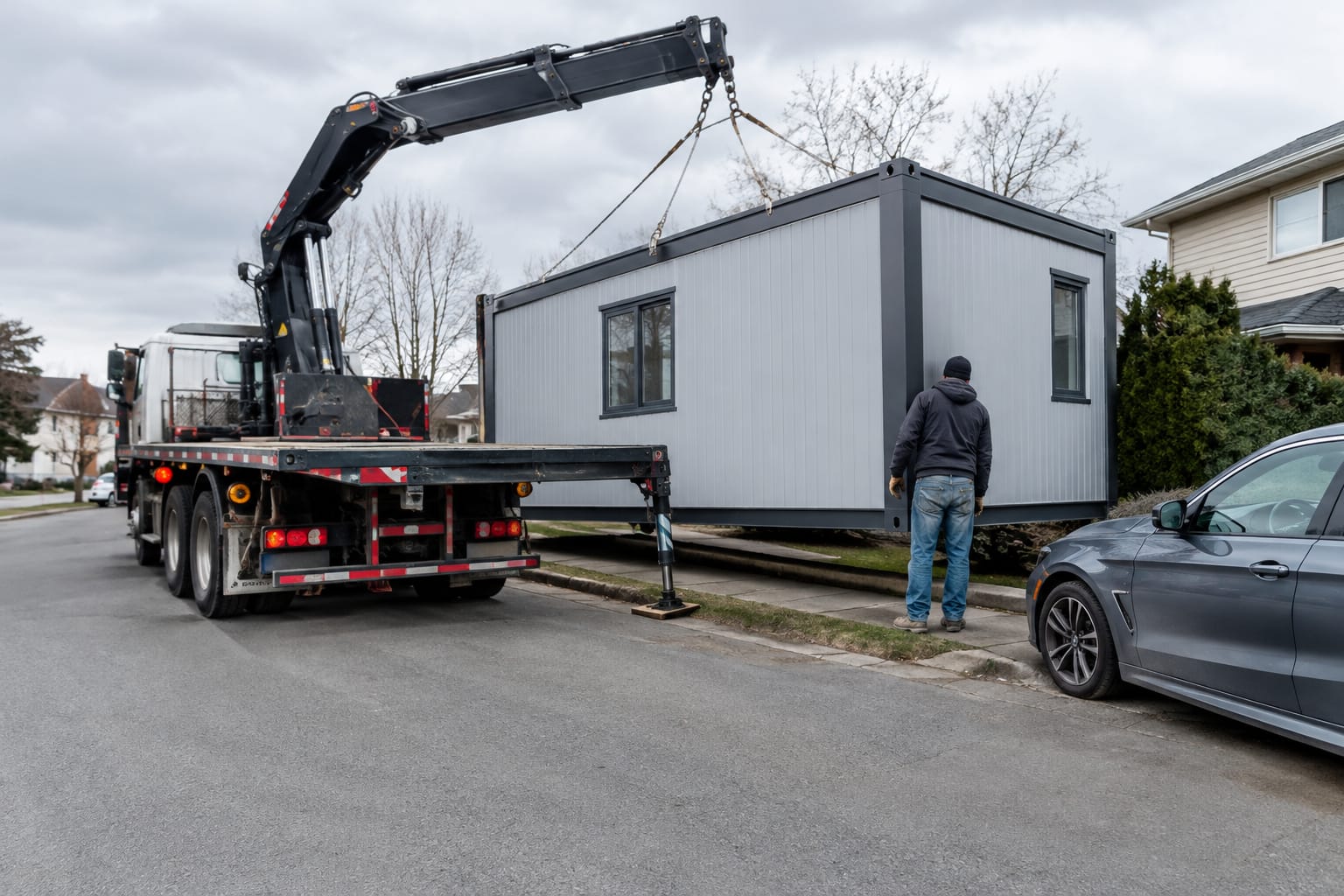
Placement matters too. Delivery trucks need a level surface, overhead clearance, and room to maneuver. Measure your driveway and check for overhanging wires or branches before delivery day. If the container must go on the street, check permit rules with your city first.
Comparing Container Companies: Service Models and Terms That Change the Price
Container companies differ in how they physically move your belongings, and that affects price, flexibility, and risk. Compare the service model and the contract terms, not just the total.
Service models
- Lift-and-place systems: a specialized truck sets the container on the ground, so you can keep it for weeks and load at your own pace.
- Trailer-based containers: the unit stays on a trailer or must be loaded within a set window. This can mean fewer days of access but sometimes simpler long-distance routing.
- Freight-network transport: some providers move containers through freight terminals or shared trucking networks. This can lower cost but adds handling steps and less precise delivery dates.
Terms that move the price
- Minimum rental period: some companies bill a full month even when you only need the container for a week.
- Proration: check whether partial months are prorated or billed in full.
- Delivery windows: a guaranteed date often costs more than a flexible window.
- Liability and claims: ask what the company pays if belongings are damaged, how you file a claim, and the deadline.
- Licensing: for interstate moves, ask for the company's USDOT number and check it in the FMCSA household goods mover search.
Licensing deserves a closer look. Federal consumer protections for interstate household goods moves, such as written estimates and claims handling, are set out in 49 CFR Part 375. Not every container company operates as a household goods mover, especially when you do all the packing and loading yourself. Ask in writing which rules and claims process apply to your move.
Pods vs. Rental Truck vs. Full-Service Movers: A Cost and Effort Comparison
A container usually sits in the middle on both price and effort. It typically costs more than a rental truck and less than a full-service crew. The right choice depends on your distance, schedule, and how much physical work you can take on.
Q: What is the difference between a moving container and a moving truck?
A: With a container, you load and unload while a professional driver handles transport. With a rental truck, you load, drive, and unload yourself, and you also cover fuel, tolls, and lodging on long trips.
| Factor | Portable container | Rental truck | Full-service movers |
|---|---|---|---|
| Who loads and unloads | You or hired labor | You or hired labor | The moving crew |
| Who drives | The container company | You | The moving crew |
| Loading timeline | Flexible, often days or weeks | Tight, tied to rental days | Set by the crew's schedule |
| Built-in storage | Often available | Not available | Available as storage-in-transit |
| Extra trip costs | Redelivery, storage months | Fuel, tolls, lodging, mileage | Accessorial charges such as stairs or long carries |
| Effort level | Moderate | High | Low |
What does this mean for your budget? Containers win when you need storage between homes, want flexible loading time, or don't want to drive a large truck across the country. A rental truck often wins on short local moves, where driving is easy and rental time is short. A full-service crew makes sense when time, physical ability, or heavy furniture matter more than price.
For a deeper look at the trade-offs, see our guide to DIY vs. full-service moving costs and our full breakdown of what a move costs. If a container no longer fits your plans, you can check licensed movers if you'd rather hire a crew.
How to Get Container Quotes You Can Actually Compare
You can only compare quotes when every company prices the same move. Give each provider identical details, then line up the results on one sheet.
- Fix your move details. Use the same origin, destination, move date, and number of rooms in every request.
- Set a realistic storage period. Add a buffer month if your closing or lease dates are uncertain.
- Request an itemized quote. Ask each company to list delivery, transport, monthly rental, storage, redelivery, and add-ons as separate lines.
- Confirm the container count. Ask how many containers the company recommends for your home size, and why.
- Get terms in writing. That includes the cancellation policy, the delivery window, the damage protection limits, and the claims process.
Use this checklist to compare quotes side by side:
| Line item | Questions to ask |
|---|---|
| Initial delivery | Is it included, and what happens if placement fails? |
| Transport or line-haul | Is fuel included, and what is the delivery window? |
| Monthly rental | What is the minimum period, and are partial months prorated? |
| Storage | Is it inside a facility, and is climate control extra? |
| Redelivery | Is there a charge to bring the container out of storage? |
| Damage protection | What is the coverage limit, and what is excluded? |
| Change and cancellation | What is the deadline, and what is the fee? |
| Licensing | What is the USDOT number for interstate moves? |

Before you call anyone, the USA Moving Advisor cost calculator estimates your moving cost by distance, home size, and services. That gives you a baseline for judging whether a container quote is in a reasonable range.
More about the service: DEMOULAS SUPERMARKETS INC
Ways to Lower Your Container Moving Cost
The most reliable savings come from needing less container space for less time. Each tactic below reduces one of the cost drivers covered above.
- Declutter before you measure. Sell or donate items before requesting quotes, so you are not paying to ship things you won't keep.
- Pack tightly. Load heavy boxes on the bottom, fill gaps with soft items, and stack to the ceiling. A tight load can mean a smaller container or one fewer container.
- Choose flexible dates. Mid-month and off-season moves usually face less demand.
- Shorten the rental window. Have boxes packed before delivery, so the container spends less time in your driveway.
- Hire labor only. Paying a loading crew by the hour is usually cheaper than full-service moving and protects your back on heavy items.
- Skip storage when you can. Direct home-to-home delivery avoids redelivery fees and extra monthly charges.

Pro Tip: Secure the load in sections with ratchet straps as you pack. Contents shift during transport, and a well-braced load is far less likely to arrive damaged.
Items That Need Special Handling Outside the Container
Some belongings should not go in a container at all, and others need professional help. Plan for them early, because they can add separate costs to your moving budget.
- Hazardous materials: propane tanks, gasoline, paint, fireworks, and corrosive cleaners are commonly prohibited. Check each provider's restricted items list.
- Vehicles: cars and motorcycles generally need separate auto transport.
- Pianos and very heavy items: a piano can usually fit in a container, but moving it safely takes trained handlers and the right equipment. Consider specialty movers for loading and unloading.
- Valuables and documents: keep jewelry, passports, financial records, and medications with you.
- Perishables and plants: food spoils and plants often fail inside a closed container. Some states also restrict bringing plants across state lines.
- Firearms: follow federal, state, and local transport laws, and check provider restrictions before packing.
Q: Can I ship a car in a moving container?
A: Most container providers do not allow vehicles inside their units. Book a separate auto transporter and confirm its USDOT registration in the FMCSA search or through its own carrier records.
How USA Moving Advisor Helps You Compare Before You Book
The biggest risks in container pricing are hidden fees, unclear terms, and unverified companies. USA Moving Advisor is an independent directory and guidance platform built to address all three before you sign anything.
The platform tracks more than 72,000 FMCSA-licensed movers. Company data comes straight from official FMCSA records, including license status, complaint history, safety data, and verified reviews. You can browse verified moving companies and filter by location, authority type, specialty, or score. You can also start with a state listing such as California movers or Florida movers.
Rankings consider FMCSA license status, complaint history, verified reviews, and operational transparency, and the methodology is public. USA Moving Advisor takes no payment from the movers it lists, so its guidance stays independent. The cost calculator lets you estimate costs by distance, home size, and services before you talk to any mover.

FAQ
Do moving container quotes include loading and unloading?
Usually not. Container moves are self-service by default, so the price covers the container, transport, and rental time. If you want help, book a labor-only crew for each end of the move and add that cost to your container quote.
Do I need a permit to park a moving container on the street?
Often, yes. Many cities require a right-of-way or street-use permit for a container on a public street, and HOAs and apartment buildings may have their own rules. Check with your city's transportation or public works department well before delivery day.
Written by USA Moving Advisor Team
Useful Links
- DIY vs Full-Service Moving: Which Saves You More?
- How Much Does a Move Cost? A 2026 Breakdown
- Storage-in-Transit Explained
- Popular Moving Routes: Cost, Distance & Movers
- Browse Verified Moving Companies
Need help with this? DEMOULAS SUPERMARKETS INC · Contact us