
Tipping movers is customary in the US, but it is not required, and the amount is your call. No federal rule, licensing standard, or moving contract sets a mandatory gratuity. How much to tip a moving company depends on four things: how long the job ran, how hard it was, how many people did it, and whether a tip already appears on your bill.
This guide covers the three common ways to calculate a moving tip and how tipping works on a long-distance move with separate crews. It also covers the step most people skip, which is reading the invoice before handing over cash.
Key Takeaways
- Tipping is optional. No federal rule or moving contract requires a tip. What you owe is set by your estimate and bill of lading, and a tip is a separate, voluntary thank-you.
- Three calculation methods. People tip a share of the final bill, a set amount per mover per hour, or a flat amount per mover. Pick the method that matches how your move is priced.
- Long-distance moves often involve several crews. The origin crew, the long-haul driver, and the destination crew may be different people. Tip each one when their part of the job ends.
- Keep damage separate from tipping. Damage belongs in the claims process. Under 49 CFR Part 1005, interstate movers must acknowledge a claim within 30 days and resolve it within 120 days.
- Read the invoice first. Some bills already include a gratuity, crew fee, or service charge, and not all of that money necessarily reaches the crew.
Do You Have to Tip Movers?
No. A tip is a voluntary thank-you, not part of the price you agreed to. The Federal Motor Carrier Safety Administration (FMCSA) regulates interstate movers. What you legally owe is set by your estimate and your bill of lading, which is the contract and receipt for your shipment.
In practice, US tipping etiquette for movers leans toward tipping when the crew does solid work. Moving is heavy, often long, and done inside your home under time pressure. Many households treat it like other service work, where a gratuity is expected but never enforced.
Published tipping advice varies widely across etiquette columns, moving company blogs, and forums. None of it is an industry standard. Treat any single figure you find online as one opinion, not a rule.
Common Ways People Calculate a Moving Tip
People use three main methods. Pick the one that matches how your move is priced, then adjust it using the factors covered further down.
| Method | How it works | Best fit | Hypothetical example: 3 movers, 6 hours |
|---|---|---|---|
| Share of the final bill | Choose a share of the invoice total and split it evenly across the crew | Flat-rate or binding-estimate moves where hours are not itemized | Your chosen share of the bill, divided by 3 |
| Per mover, per hour | Pick an hourly amount for each person on the crew | Hourly local moves | 3 movers × 6 hours = 18 mover-hours, multiplied by your hourly amount |
| Flat amount per mover | Give each crew member one fixed amount | Short jobs, or moves where hours are hard to track | Your flat amount × 3 |
A Worked Example (Hypothetical)
Take a hypothetical local move with 3 movers working 6 hours on an hourly moving rate. With the per-hour method, the job comes to 18 mover-hours. Multiply your chosen hourly amount by 18 for the total, then give each mover one-third.
On the same move, the flat method means choosing one amount per person and multiplying by 3. It is simpler, but it does not scale if the job runs long. These numbers show how the math works. They are not a recommendation.
Q: Is a hundred dollars per mover a good tip?
A: That depends on mover-hours. For a 2-hour studio move it is generous. For a 12-hour day of carrying a four-bedroom house down stairs, it works out to much less per hour of effort.
That is why the per-hour framing helps even if you plan to hand out flat amounts. It shows what your tip means relative to the work the crew actually did.
Tipping on Local Moves vs. Long-Distance Moves
On a local move, the same crew usually loads, drives, and unloads on the same day. One tip at the end, split evenly across the crew with the foreman included, covers everyone. To see the hours behind that tip, it helps to understand how local movers bill by the hour.
Long-distance moves work differently. To tip long-distance movers fairly, first find out who will actually handle your belongings:
- Origin crew. They pack and load the truck, and they are often a local agent's team. Tip them when loading is finished.
- Long-haul driver. They drive the truck across state lines and may or may not be one of the loaders. If the driver helps load or unload, include them in that crew's tip. If they only drive, a separate thank-you at delivery is a common choice.
- Destination crew. They unload at your new home and are often a different, locally hired team. Tip them when delivery is complete.
Ask the foreman at loading who will be there at delivery, then set aside a separate tip for each crew. Loading and delivery can be days or weeks apart, so building both into your long-distance move timeline keeps the second tip from becoming an afterthought.
Q: Do you tip the driver separately on a long-distance move?
A: Only if the driver is not part of a crew you have already tipped. On interstate moves the long-haul driver is often a different person from the origin loaders and the destination unloaders, so confirm roles with the foreman.
Factors That Justify Tipping More or Less
Adjust your chosen method based on the work itself, not only the size of the bill.
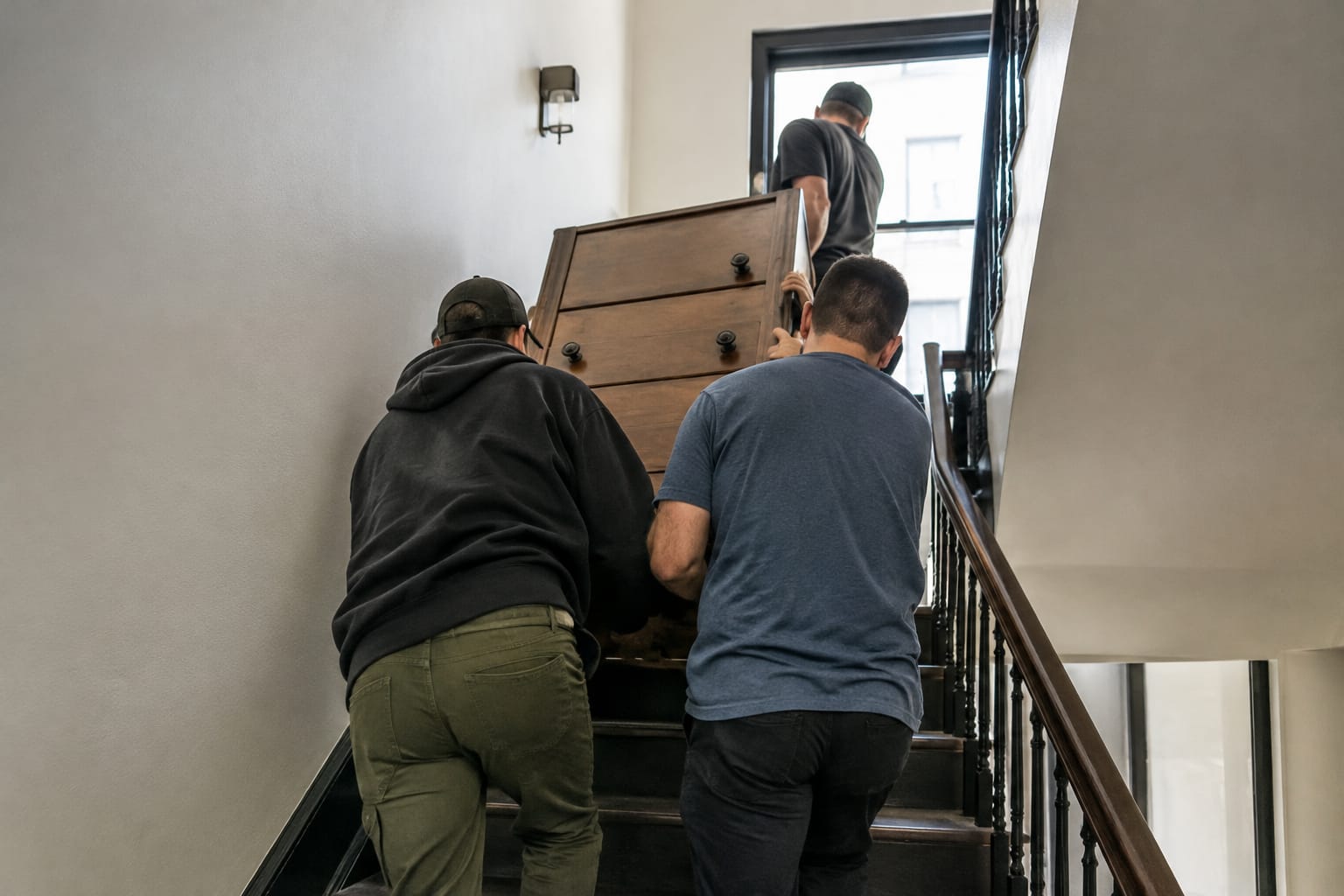
Reasons to tip more:
- Stairs, no elevator, or a long carry from the truck to the door
- Heavy or awkward items such as pianos, safes, or solid-wood furniture
- Extreme heat, cold, or rain
- Careful protection of floors, doorframes, and fragile pieces
- Disassembly, reassembly, or other extra tasks handled without fuss
- A job that ran long through no fault of the crew
Reasons to tip less, or not at all:
- Arriving late without notice
- Rough handling or careless wrapping
- Long, unexplained breaks while the hourly clock runs
- Unprofessional behavior, or pressure on you to pay in cash or to tip
One distinction matters here: a tip is not a remedy for damage. If something arrives broken, note it on the delivery paperwork before you sign. Our guide to documenting damage on your inventory explains how. On interstate moves, federal claim rules in 49 CFR Part 1005 require the mover to acknowledge a written claim within 30 days and to pay, decline, or make a settlement offer within 120 days.
The tip and the claim run on separate tracks. You can reward a crew's effort and still file a claim for a damaged dresser. Never accept a smaller payout in exchange for a tip, and treat any crew that links tips to releasing your goods as a serious red flag.
How and When to Hand Over the Tip
Tip at the end of each crew's work. Wait until after the final walkthrough and after you have checked the inventory, not before. A tip handed over at the start rewards a job that has not been done yet.
You can hand each mover their share directly or give the total to the foreman to split. Handing it out individually is the surest way to make sure every person on the moving crew receives their part.
Cash or card: Cash goes straight to the crew. Tips added to a card payment or invoice may be routed through the company's payroll, so ask the foreman how card tips reach the crew before you pay that way. Payment apps sent to individual movers also work if the crew agrees.
Pro Tip: Withdraw cash a few days before the move and prepare one labeled envelope per crew, for example origin crew, driver, and destination crew. On a long-distance move, the destination envelope is easy to forget once the boxes are packed.
More about the service: UNITED CENTRAL INDUSTRIAL SUPPLY COMPANY LLC
Non-Cash Ways to Show Appreciation
Small gestures add to a tip. They do not replace one for a long, hard job.

- Water and drinks. Set out cold bottled water at both ends of the move, especially in summer.
- A meal. On a full-day job, ask the foreman before ordering lunch so it fits the crew's break schedule.
- A clear path. Reserve parking, clear walkways, and keep pets and children out of carrying routes. This speeds up the job and lowers the risk of injury.
- A written review. Name the foreman and crew members when you can. Specific feedback helps them inside their company and helps the next household choose a mover.
USA Moving Advisor company profiles show verified reviews alongside FMCSA license data. To leave feedback on the crew that moved you, start by signing in to share how your movers performed.
Check Your Bill First: Is a Gratuity or Service Fee Already Included?
Before deciding on a tip, read your estimate and final invoice line by line. Some bills include a gratuity line, a crew fee, or a general service charge.

Those labels do not all mean the same thing. A line marked gratuity is usually meant for the crew. A service charge or administrative fee may go entirely to the company. If a line is unclear, ask the foreman or the office whether any of it is paid to the movers.
If a gratuity is already included, anything extra is optional. If nothing is included, add your planned tip as its own line when budgeting the total cost of your move, so it does not come as a surprise on moving day.
The Bottom Line on Tipping Movers
Tipping is a discretionary thank-you. Choose a method that fits how you are billed, scale it to the work, split it fairly across every crew, and confirm what your bill already includes. Keep damage issues in the claims process, where federal rules protect you.
The tip comes at the end of a move. The first step is hiring a licensed mover. Every company in the USA Moving Advisor directory is FMCSA-licensed, so you can check a mover's license status and complaint history before you book.
Frequently Asked Questions
Do you tip movers who only pack?
Yes, if you are tipping the moving crew, packers usually get the same treatment. When a separate team of packers comes the day before, tip them at the end of packing day. If the same crew packs and then moves you, one tip covering both days is enough.
Is it rude not to tip movers?
It is not a breach of contract, and you owe nothing beyond your bill. Many crews do expect a tip for good work, though. If you skip it because of poor service, a short, specific explanation to the foreman or the company is more useful than silence.
How do you tip movers on a flat-rate move?
When hours are not itemized, use the share-of-the-bill method or a flat amount per mover. You can still estimate mover-hours by noting the crew size and the arrival and departure times, then check that your tip fits the effort.
Written by USA Moving Advisor Team
Useful Links
- How Much Does a Move Cost? A 2026 Breakdown
- Local Moves: How Hourly Pricing Really Works
- Planning a Long-Distance Move: A Step-by-Step Timeline
- Your Rights When You Move
- Moving FAQ
Need help with this? UNITED CENTRAL INDUSTRIAL SUPPLY COMPANY LLC · Contact us