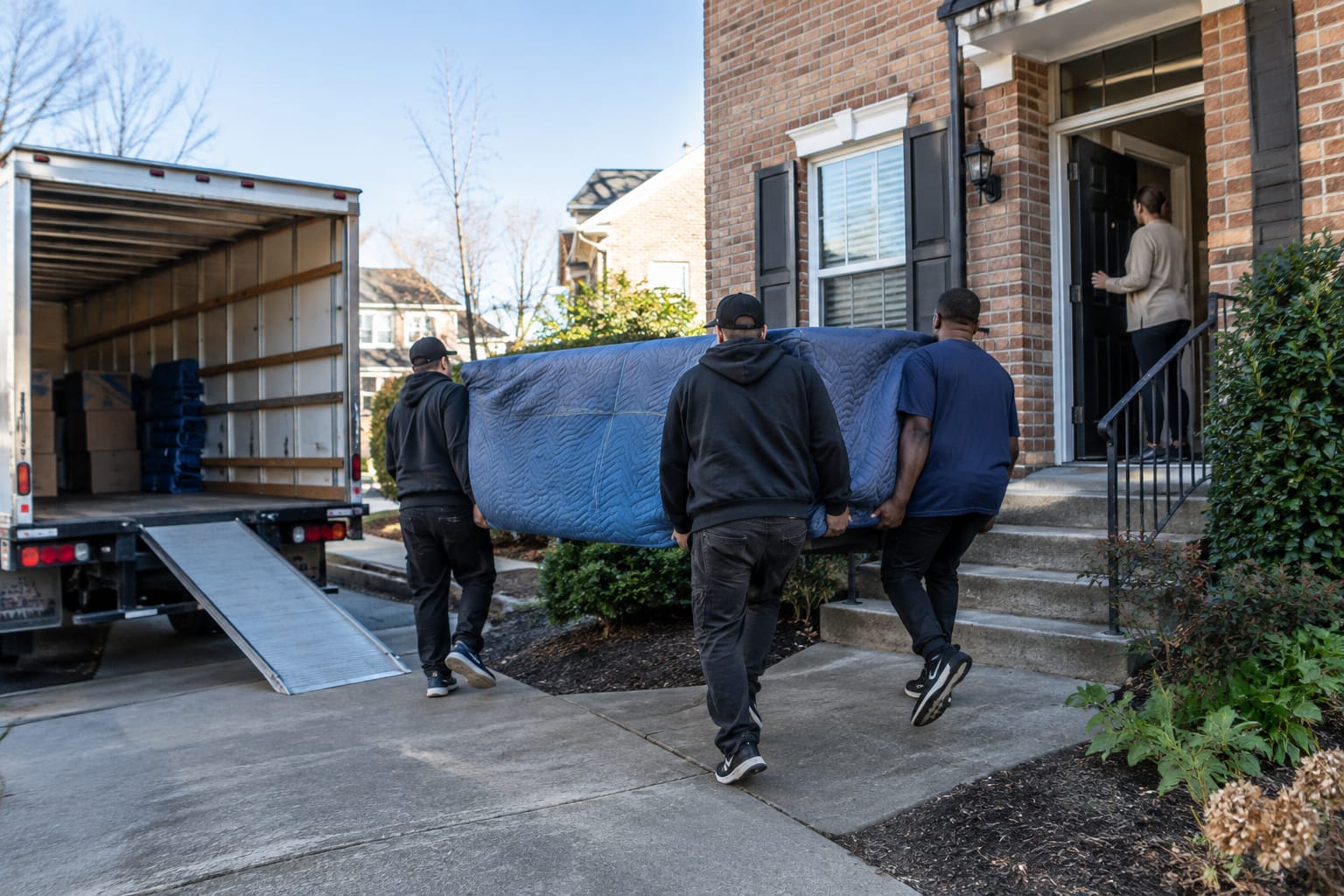
On moving day with professional movers, the work follows a set order. The crew arrives and walks through your home with you. They present paperwork, tag and inventory your belongings, then pad and load the truck. Before leaving, they ask for your signature. Delivery reverses that order and adds one critical step: checking every item before you sign that it arrived in good condition.
Knowing what to expect on moving day matters because most of your leverage sits in a few short moments. The documents you sign, and the notes you add to them, decide what you can claim later if something breaks or the price changes. This guide follows the day in order, from your side of the clipboard. It shows which documents appear, when they appear, and what each signature commits you to with a household goods carrier, which is the federal term for a mover that transports personal belongings.
If your move is still weeks away, start with a step-by-step long-distance moving timeline and come back to this guide the week of the move.
Key Takeaways
- Read before you sign. The bill of lading is your contract with the mover and your receipt for your goods. Never sign a blank or incomplete one.
- Check the inventory notes. Condition codes written at pickup become the baseline for any later damage claim.
- Know your valuation level. Released value protection pays far less than full value protection, and your choice is recorded on the bill of lading.
- Inspect at delivery. Note damage or missing items on the paperwork before the crew leaves.
- Tipping is optional. It is a custom, not a charge, and it never belongs on the contract.
Moving Day at a Glance: The Full Timeline
Here is what happens on moving day, stage by stage. Use it as a moving day checklist and keep it handy on your phone.
| Stage | What the crew does | What you do |
|---|---|---|
| Day before | Confirms arrival window, crew size, and access | Finish packing, set aside essentials, confirm building rules |
| Arrival | Crew lead introduces the team and walks the home | Point out fragile items, items staying behind, and access limits |
| Paperwork | Presents the bill of lading and related documents | Read every field before signing |
| Inventory | Tags items and records their condition | Review condition notes and correct errors on the spot |
| Loading | Pads, wraps, disassembles, and loads | Stay reachable and keep paths clear |
| Departure | Final walkthrough and signatures | Check every room and keep copies of all documents |
| Delivery | Unloads, places, and reassembles | Check items against the inventory before signing |
The Day Before: Confirmations and Final Prep
Most moving-day problems start the day before. A short confirmation call settles the details that otherwise surface at 8 a.m. with a truck idling outside.
Use that call to confirm:
- Arrival window and contact. Get a direct number for the crew lead, the on-site supervisor who handles paperwork and directs loading.
- Payment method. Ask what the mover accepts at delivery, since some carriers do not take personal checks.
- Building requirements. Many apartment and condo buildings require a certificate of insurance, a document from the mover's insurer proving coverage, plus a reserved elevator or loading dock.
- Parking. Make sure the truck has a legal place to stop at both addresses.
Finish packing before the crew arrives unless you paid for packing service. Half-packed rooms slow the crew, and on hourly local moves that time comes straight out of your budget. A room-by-room packing guide helps you close out the last rooms in a sensible order.
For an interstate move, verify the mover's USDOT number one last time. The FMCSA SAFER system shows whether a carrier's operating authority is active, and you can also check licensed moving companies by state, including complaint history and safety data. A carrier whose authority has lapsed should not be loading your home.
When the Crew Arrives: Walkthrough and Paperwork
Expect the crew lead to introduce the team and ask for a quick tour before anyone lifts a box. This moving day walkthrough is your chance to set the plan.
Walk every room with the crew lead and point out:
- Items that stay behind or travel in your own car
- Fragile or high-value pieces that need extra care
- Furniture that needs disassembly, such as bed frames and dining tables
- Tight stairwells, low doorways, and floors that need protection

Then comes the paperwork. For interstate moves, federal rules in 49 CFR Part 375 require written estimates, an order for service, and a bill of lading. The order for service confirms the dates, services, and estimate you agreed to. Compare it against your original quote before anything else happens.
Q: What paperwork do movers give you on moving day?
A: For interstate moves, FMCSA rules under 49 CFR Part 375 require a written estimate, an order for service, and a bill of lading. Most interstate movers also prepare an itemized inventory at pickup.
Local and intrastate moves follow state rules, and those rules vary widely. Check your state's transportation department, public utility commission, or attorney general's office to learn which requirements apply to a move that never crosses a state line.
Reading the Bill of Lading Before You Sign
The bill of lading (BOL) is the single most important document of the day. FMCSA's Your Rights and Responsibilities When You Move booklet describes the bill of lading as both your contract with the mover and the receipt for your goods. Whatever it says governs your move.
Before signing, confirm the BOL shows:
- The mover's legal name, address, and USDOT number
- Pickup dates and the delivery window, meaning the date range in which the mover commits to delivering
- The estimate type and the charges you agreed to
- Every additional service, such as packing, stairs, long carries, or a shuttle truck
- The valuation level you selected
- Payment terms and accepted payment methods
Never sign a blank or partly blank document. A missing price or date field gives the mover room to fill it in later.
Binding vs. non-binding estimates
A binding estimate locks the price for the services listed. A non-binding estimate is an approximation, and the final bill depends on the actual weight and services. On weight-based interstate moves, the same FMCSA booklet explains your right to watch the shipment being weighed and to request a reweigh before delivery.
Released value vs. full value protection
Valuation is not insurance. It sets how much the mover owes you if something is lost or damaged.
| Option | Cost to you | What the mover owes |
|---|---|---|
| Released value protection | No added charge | A capped amount per pound, per item |
| Full value protection | Priced by the mover | Repair, replacement, or cash for the current market value |
Per 49 CFR Part 375 and the FMCSA booklet, released value protection limits the mover's liability to 60 cents per pound per article, so a 10-pound lamp is covered for no more than $6 regardless of its real value. Full value protection applies to interstate moves unless you waive it in writing. Items worth more than $100 per pound count as extraordinary value and must be listed on the shipping documents, as the FMCSA booklet explains in its valuation section. Confirm the rate printed on your own BOL, since that document controls your move.
For a deeper explanation of your rights regarding the bill of lading and valuation, including how claims work, read that guide before moving day rather than during it.
Q: Should I sign the bill of lading before the truck is loaded?
A: Yes, the BOL is normally signed at pickup, before loading starts, but only once every field is complete and matches your estimate. FMCSA warns consumers never to sign blank or incomplete moving documents.
Inventory and Condition Notes: Your Record for Delivery
Most interstate movers prepare an inventory sheet at pickup. The crew places a numbered sticker on each box and piece of furniture, then records its condition using shorthand codes for scratches, dents, chips, and wear. The code key usually appears on the sheet itself.

Here's the thing: this moving inventory at pickup becomes the baseline for every future claim. If the crew marks your dresser as scratched all over when it has one small mark, a new gouge at delivery becomes hard to prove.
Protect yourself in three ways:
- Read the condition notes as items are tagged, not after the truck is full.
- Write your disagreement directly on the sheet when a note is inaccurate.
- Take dated photos of valuable furniture and electronics before they are wrapped.
Note the total item count at the bottom of the sheet. At delivery, every tag number gets checked against that list. Also ask how the mover handles claims on boxes you packed yourself, since carriers often treat owner-packed boxes differently.
Packing, Padding, and Loading: How the Crew Works
What do movers do on moving day once the paperwork is done? A professional crew follows a consistent workflow:
- Protect the home. Floor runners and door-frame pads go down first.
- Disassemble. Bed frames, table legs, and large shelving come apart, with hardware bagged and labeled.
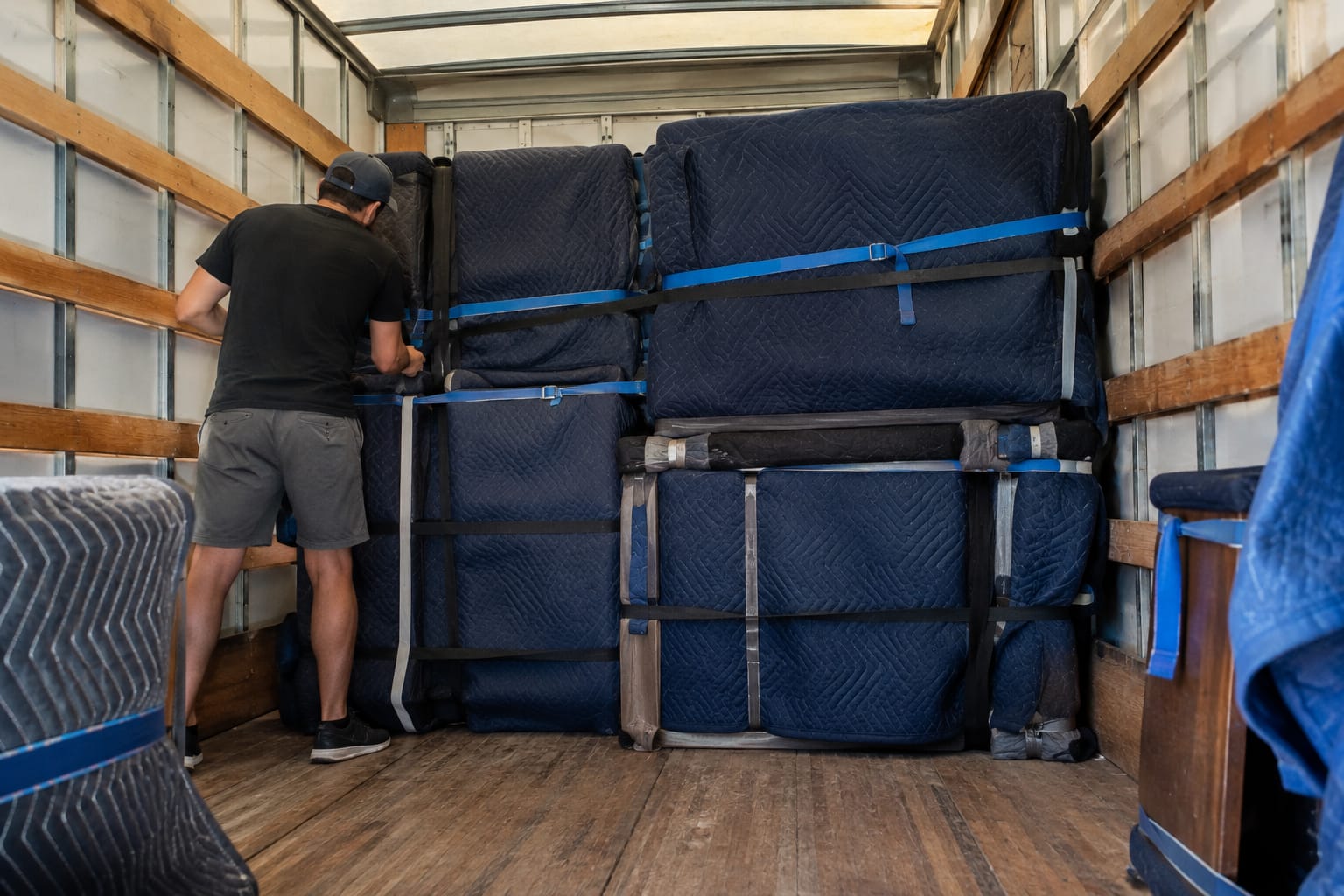
- Wrap. Furniture goes into quilted moving blankets. Upholstery gets shrink wrap and mattresses get bags.
- Load in tiers. Heavy, flat-sided pieces go in first against the front wall, followed by boxes that fill the gaps.
- Secure. Straps lock each tier in place so nothing shifts in transit.
How long does it take movers to load? There is no standard number. Loading time depends on shipment size, crew size, stairs or elevator waits, the distance from door to truck, and whether everything was packed on arrival. Your estimate or order for service lists the crew size and, for hourly moves, the expected hours, so compare the pace against that plan.
What Movers Won't Take and What Should Ride With You
Every mover keeps a list of non-allowable items. Ask for it in writing during the estimate stage so you are not sorting garages at the last minute.
Common refusals include:
- Hazardous materials such as gasoline, propane tanks, paint, aerosols, and cleaning chemicals
- Ammunition and fireworks
- Perishable food
- Live plants on many interstate routes, due to state agricultural rules
Some items should travel with you even when the mover allows them. Keep jewelry, cash, passports, financial records, prescriptions, laptops, keys, and irreplaceable keepsakes in your own vehicle. Valuation caps and extraordinary-value rules make these poor candidates for a truck you cannot see.
Your Role During the Move: Supervising Without Slowing Things Down
Your job is to stay reachable, not to hover. Choose one adult as the point person who answers the crew's questions and makes on-the-spot decisions.
Useful habits during loading:
- Mark anything not going on the truck with a clear do-not-load sign, or move it to one closed room.
- Keep hallways and the path to the truck clear.
- Give the crew access to a bathroom and drinking water.
- Watch the inventory process for your most valuable pieces.
Children and pets add real risk around open doors and heavy furniture. A plan for keeping kids and pets safe and calm on moving day removes a major distraction for both you and the crew.
Final Walkthrough and Departure
Before the truck pulls away, walk the home one more time. Check every closet, cabinet, attic, basement, garage, and outdoor shed. Items left in a corner of the garage are a common surprise.
Then close out the paperwork:
- Confirm the inventory item count and sign the inventory sheet.
- Get copies of the bill of lading and inventory, either paper or a confirmed digital copy.
- Confirm the delivery window and the driver's direct contact details.
- On long-distance moves, ask how the mover will confirm the exact delivery date.
Photograph the empty rooms as well. Those images help settle security-deposit or closing disputes.
Delivery Day: Unloading, Checking Items, and Paying
Be present for delivery or name an adult to act for you. Many interstate carriers require payment before unloading, and your estimate or order for service states the terms.
If you have a non-binding estimate, a federal protection applies. Under 49 CFR Part 375, the mover cannot demand more than 110 percent of a non-binding estimate at delivery; any remaining balance is billed later and is due within 30 days.
As the crew unloads, check off each tag number against the inventory. Direct furniture to its room and confirm that anything disassembled at pickup gets reassembled.

Inspect furniture as it comes off the truck. Write any damage or missing items on the inventory and delivery receipt before you sign. Be specific: tag number, item, and the problem. Do not sign a statement that everything arrived in good condition until you have actually looked.
Damage hidden inside boxes can still be claimed after the crew leaves. The FMCSA booklet gives you nine months from delivery to file a written claim. Once the truck is gone, a first-week checklist after the move helps you unpack, inspect, and document in a sensible order.
When Things Go Off Script: Late Crews, Price Changes, and Damage
Even well-run moves hit snags. How you respond in the moment shapes how they get resolved.
Late crew. Call the crew lead or dispatcher, then follow up in writing so you have a timestamped record. For interstate moves, the agreed pickup and delivery dates appear on your paperwork and are part of the contract.
Price changes. A mover may legitimately revise charges if you add services or the shipment is larger than estimated. A mover demanding far more cash than your estimate before unloading is a classic warning sign of a hostage-goods scam.
Q: What should I do if movers try to raise the price on moving day?
A: Refuse to sign revised documents you have not reviewed, and check your estimate type. For non-binding interstate estimates, 49 CFR Part 375 caps what the mover can collect at delivery at 110 percent of the estimate.
If an interstate mover refuses to deliver or makes threats, document everything and report it to FMCSA's National Consumer Complaint Database. The broader FMCSA Protect Your Move program explains your next steps and red flags.
Damage. Record it on the delivery paperwork, photograph it, and file a written claim within the nine-month window noted above. Under 49 CFR Part 370, the mover must acknowledge a claim within 30 days and pay or decline it within 120 days.
Frequently Asked Questions
Should I tip movers, and how much is typical?
Tipping is a custom, not a requirement, and no federal rule sets an amount. Base it on the difficulty of the job, the care the crew showed, and your own budget. Cash handed to each mover, or to the crew lead to split, is the usual approach, and a tip should never appear as a line on the bill of lading.
Do I need to be home the whole time the movers are working?
Someone with authority to sign and make decisions should be on site for the walkthrough, the paperwork, the inventory, and the final walkthrough. During the middle of loading, a trusted adult can stand in for you, as long as they stay reachable and know what is and is not going on the truck.
Written by USA Moving Advisor Team
Useful Links
- Your Rights When You Move: BOL, Inventory, and Valuation
- The Room-by-Room Packing Guide
- Planning a Long-Distance Move: A Step-by-Step Timeline
- After the Move: Your First-Week Checklist
- Moving with Kids and Pets: A Sanity-Saving Guide
Need help with this? DEMOULAS SUPERMARKETS INC · Contact us