
Here's the distinction that costs people the most money: what your mover offers is not insurance — it is valuation, a limit on the company's liability if your goods are lost or damaged. Insurance is a separate product sold by a licensed insurer. Confusing the two is why families expect a full payout after a broken dresser and receive a few dollars instead. This article explains both federal valuation options, what each pays and excludes, when a genuine third-party policy is warranted, and how to file a moving claim before the deadline closes.
Key Takeaways
- Valuation ≠ insurance. Movers offer valuation — a liability limit under 49 CFR Part 375 — not an insurance policy from a licensed insurer.
- Released Value pays little. The free default caps liability at 60 cents per pound, per item, so a 25 lb TV returns about $15 regardless of retail value.
- Full Value Protection is priced per shipment. The mover must repair, replace, or pay market value, but the charge depends on declared value and deductible and appears on your written estimate.
- Declare high-value items in writing. Jewelry, art, and collectibles must be listed on the high-value inventory form, or the carrier's liability for them may be limited.
- Nine-month claim window. For interstate moves, 49 CFR Part 375 gives you at least nine months to file, with a 30-day mover acknowledgment and 120-day resolution.
Valuation Isn't Insurance: The Distinction That Costs People Money
A household goods carrier is not an insurance company. Under federal rules, interstate movers must offer valuation coverage, which sets the maximum dollar amount the company owes for loss or damage — not a policy that pays out like homeowners coverage.
The FMCSA "Your Rights and Responsibilities When You Move" guide defines two valuation levels every interstate mover must present: Released Value Protection and Full Value Protection. Both are levels of liability, governed by 49 CFR Part 375, the regulation for interstate household goods transportation.
Q: Is moving insurance the same as valuation coverage?
A: No. Valuation is a mover's liability limit set under 49 CFR Part 375; true insurance is a separate policy from a licensed insurer. Movers are not licensed to sell insurance.
The practical takeaway is simple. When a sales rep says your move is "insured," ask whether they mean valuation or an actual policy. The answer changes what you can recover.
Released Value Protection: What 60 Cents Per Pound Really Pays
Released Value Protection is the free, default option. Per the FMCSA guidance above, it caps the mover's liability at 60 cents per pound, per item — and nothing more.
That weight-based formula is where people get hurt, because value and weight rarely match. The math punishes light, expensive things and barely registers cheap, heavy ones.

Because released value coverage pays by weight rather than by what an item is worth, the payout can fall far short of replacement cost. This gap is widest for light, valuable items like a flat-screen TV, but even a heavy solid-wood dresser may be reimbursed for much less than its retail value.
The TV is worth far more but weighs almost nothing, so Released Value returns a token amount. This is the coverage you accept by default if you sign nothing else — which is exactly why understanding your rights when you move: BOL, inventory, and valuation matters before the truck arrives.
Pro Tip: Released Value must be chosen in writing on the bill of lading. If that box is left blank, federal rules default your shipment to Full Value Protection — so read the document before you sign.
Full Value Protection: How It Works and What It Costs
Full Value Protection is the more comprehensive federal option. Under it, if an item is lost, destroyed, or damaged, the mover must repair it, replace it with a like item, or pay a cash settlement for the current market value — the customer's choice, per the FMCSA guide.
This is the standard, more protective level of mover liability. It is not free, and it is not a fixed national price.
Q: How much does full value protection cost?
A: There is no fixed rate. The charge is set by the carrier and depends on the declared value of your shipment and any deductible you select — it must appear as a line item on your written estimate and bill of lading.
Because pricing is set per shipment, compare the Full Value charge on your written estimate rather than trusting a verbal figure. Movers may also limit liability on items of "extraordinary value" unless you list them — covered below. You can start by reviewing carriers with active FMCSA insurance filings so you know a company's authority and insurance are current before you book.
When You Need Actual Third-Party Moving Insurance
Third-party moving insurance is a separate policy from a licensed insurer, purchased to sit alongside — or on top of — the mover's valuation. It becomes worth considering in specific situations, not as a blanket default.
A standalone policy makes sense when your shipment includes high-value goods whose worth far exceeds any weight-based payout, or when you want coverage for perils valuation excludes. It is often unnecessary for a modest local move of ordinary household items already covered by Full Value Protection.
Before buying, check what you already carry. A homeowners or renters policy may extend limited coverage to belongings during a move, though named perils, transit exclusions, and deductibles vary widely — confirm the specifics with your insurer in writing. If a mover holds your goods between pickup and delivery, also confirm how coverage works during storage-in-transit, since liability terms can shift once items sit in a warehouse.
High-Value Articles: Why You Have to Declare Them in Writing
Items of extraordinary value — jewelry, currency, art, collectibles, important documents — carry special rules. Movers can cap or exclude liability on these unless you identify them in writing before the move.
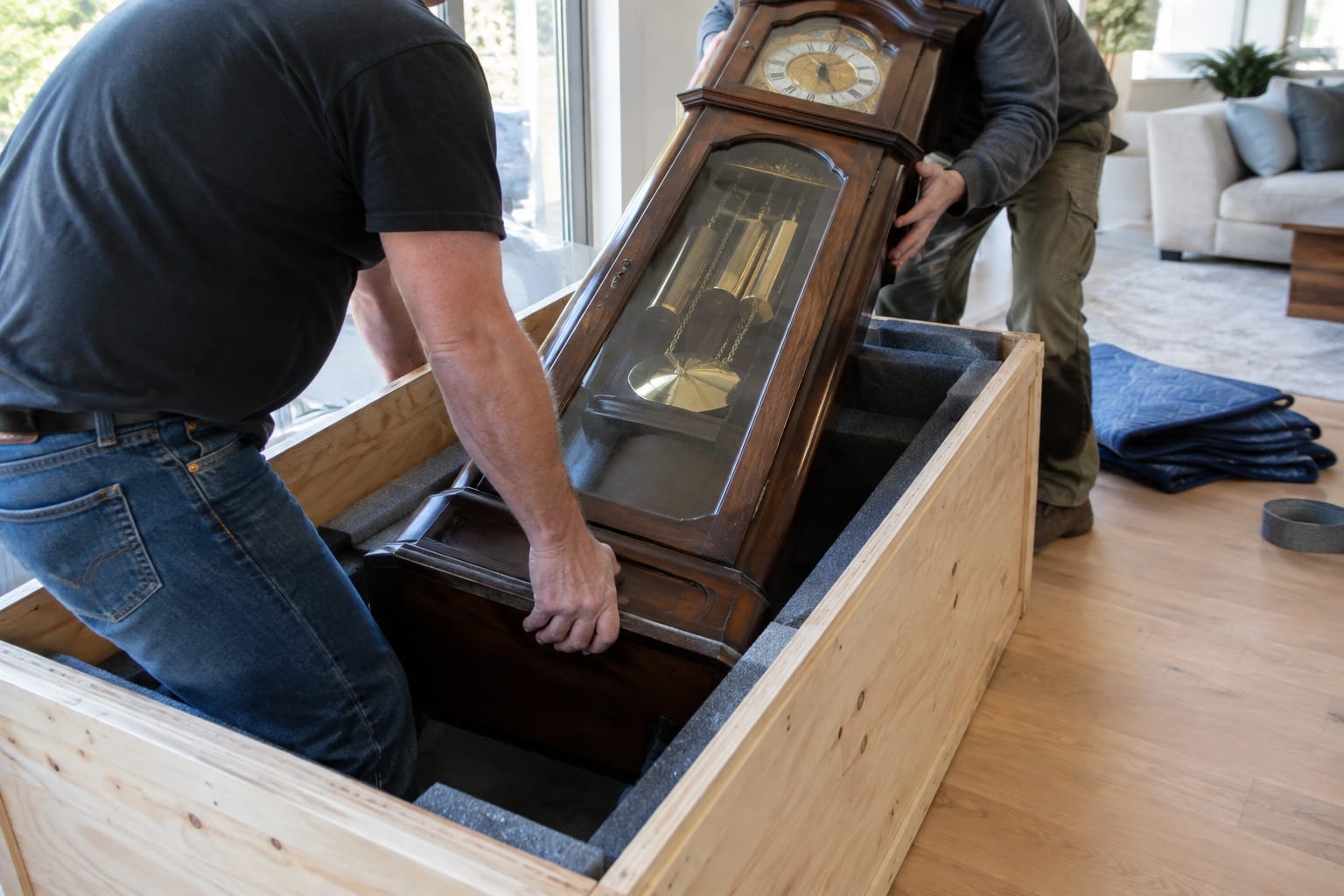
Most bills of lading include a high-value inventory form or an "articles of extraordinary value" statement. Listing an item there preserves your right to full recovery; leaving it off can void it. This is a documentation step, not a formality.
Q: Do I have to declare valuables in writing?
A: Yes. Per site FAQ guidance and standard bill-of-lading practice, items of extraordinary value must be listed on the mover's high-value inventory form before loading, or the carrier's liability for them may be limited or excluded.
Specialty items follow the same logic and often need dedicated handling and crating. A guide to moving pianos, art, and other specialty items walks through how these pieces are protected, and why their coverage terms differ from a box of books.

What Coverage Won't Cover: Owner-Packed Boxes and Common Exclusions
Even Full Value Protection has limits. The most common surprise is owner-packed cartons: when you pack a box yourself, the mover generally is not liable for internal damage unless there is clear evidence the crew mishandled the container.
Other frequent exclusions and reductions include:
- Items on a high-value list that were never declared in writing
- Damage from natural disasters or events outside the mover's control
- Loss where the customer chose a released-value liability limit
- Perishables, plants, and hazardous materials movers won't transport
- Goods packed in a box that shows no external damage but has broken contents
The fix is straightforward. Let the mover pack fragile and high-value items so responsibility stays with the professional, and photograph condition before loading.
How to File a Claim and the Deadlines That Apply
If goods arrive damaged or missing, you file a written claim with the mover — and the clock is federal, not negotiable. Under 49 CFR Part 375, you generally have nine months from delivery to file a claim for loss or damage on an interstate move.
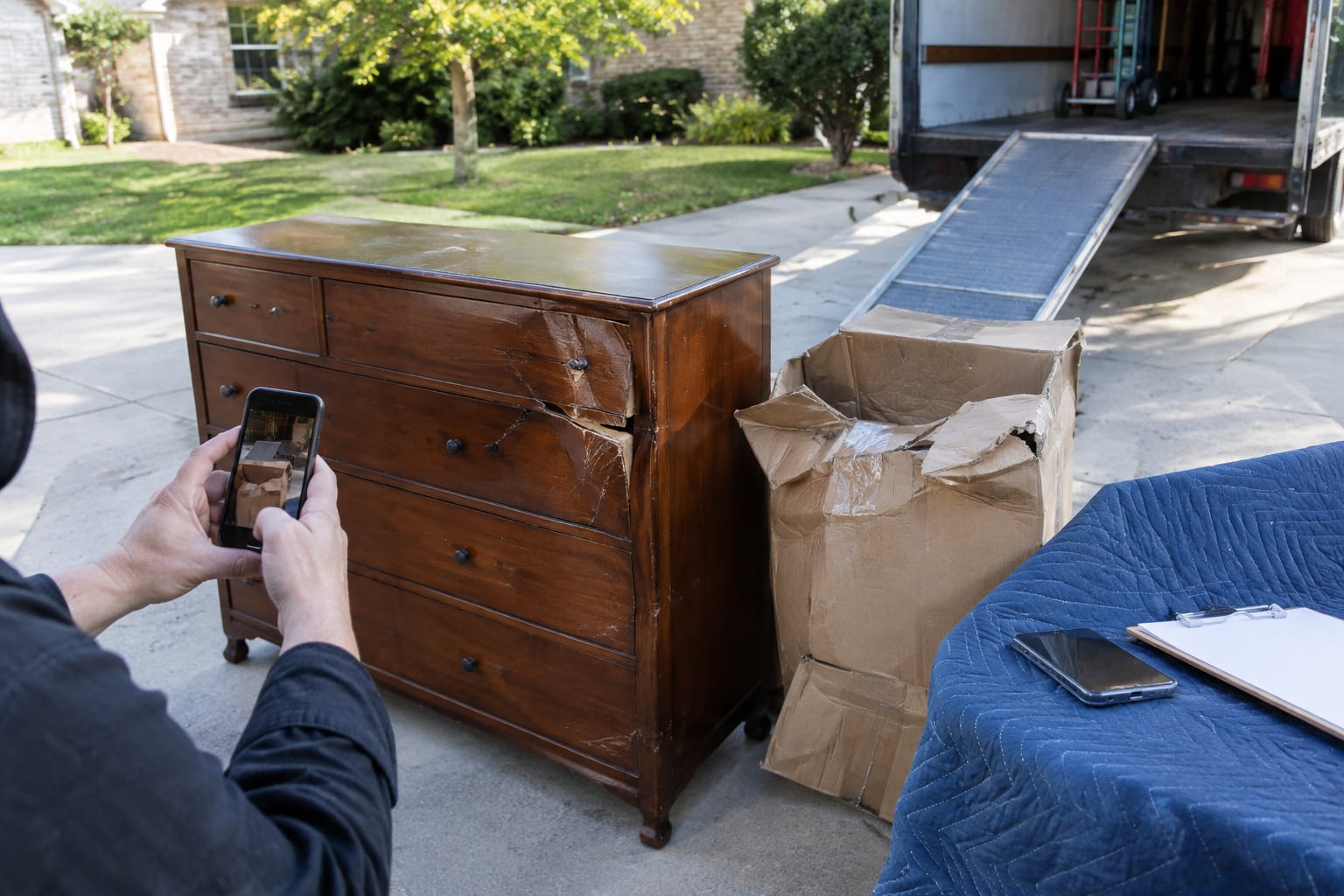
The process moves through defined steps and its own response deadlines:
- Document at delivery. Note visible damage on the bill of lading or delivery inventory before the crew leaves. Photograph each damaged item and the packaging.
- File in writing within nine months. Submit a written claim describing each item, its value, and the loss. Keep a copy.
- Mover acknowledges within 30 days. Under the federal rule, the carrier must acknowledge receipt of your claim within 30 days.
- Resolution within 120 days. The mover must deny or pay the claim within 120 days, or explain in writing why more time is needed.
Q: How long do I have to file a moving claim?
A: For interstate moves, 49 CFR Part 375 gives you a minimum of nine months from delivery to file a written claim, and the mover must acknowledge it within 30 days.
One caution: don't wait for a repair estimate to start. Filing the written notice within the window preserves your rights; you can supplement details later.
Watch the red flags that predict a hard claim, too. A blank bill of lading, no in-home or video survey, and a missing or mismatched USDOT/MC number are classic warning signs — the same signals that separate legitimate carriers from problem operators.
Frequently Asked Questions
Does homeowners insurance cover items during a move?
Sometimes, but partially. Many homeowners and renters policies extend limited off-premises coverage to belongings in transit, though transit perils, sub-limits, and deductibles vary. Confirm the exact terms with your insurer in writing before relying on it.
What is released value protection in one sentence?
It is the free, default federal valuation level that limits a mover's liability to 60 cents per pound, per item — regardless of what the item is actually worth.
How do I move a piano or a car safely?
These require specialty handling, dedicated equipment, and their own coverage terms. Declare them in advance and review how specialty items are crated and protected before booking.
Written by USA Moving Advisor Team, Moving-company review platform Experts
Useful Links
- Your Rights When You Move: BOL, Inventory, and Valuation
- Moving Pianos, Art, and Other Specialty Items
- Storage-in-Transit Explained: Rights, Limits, and Costs
- The Room-by-Room Packing Guide
- Moving FAQ — Costs, Rights, Scams & More
Need help with this? Contact us